Natural Home Building Is
MINDFUL BUILDING
INFORMED BUILDING
ETHICAL BUILDING
I believe the building industry has come a long way in the design and construction of energy efficient quality homes. And I am not saying natural building is the only way to build. But sometimes it feels like we are living in a cookie cutter world using high tech and non-renewable building materials pumping out batches of buildings. I worry in our race for perfection and reduced energy operating costs we are losing sight of the opportunity to exercise our creativity and use or modernize traditional building techniques.
Our architect Keith Tatlow Architect AIBC, shared “natural building is the act of honouring our ancestral collective memory of what shelter and living locally off the land really means. Collectively, I think we miss the deeper connection with nature and the local environment we as humans on the earth have always had. It’s only a short time that living detached from the heart in fully synthetic houses was even possible.”
I am drawn to natural building for simple reasons; ones I suspect draw others too. A discussion about natural buildings turns easily to the aesthetics, how pleasing to the eye, how comfortable to live in. People often refer to the health benefits and their low environmental footprint. What draws me most, however, is the community of builders, enthusiasts, volunteers and the general public that natural building attracts.
Ianto Evans, natural builder and co-author of the Hand-Sculptured House: A Practical and Philosophical Guide to Building a Cob Cottage got it right when he wrote “…Natural building implies profoundly different attitudes to places, building sites, ecology, work and how we live in buildings.”
It is not enough for the ‘building’ to be constructed using locally sourced, recycled and sustainable natural materials; but also the process of ‘building’ needs to be sustainable with the end result a place to live and thrive in. I am confident our decision to build a radically sustainable, off-grid home (Earthship) using Permaculture principles; care of earth, care of people and sharing of abundance is the right choice for us.
The following is a simplified list of common natural building techniques and materials.
• Adobe, commonly used in house construction in Arizona and New Mexico, is a type of clay formed into a brick and then dried in the sun. The brick is used as a building material.
• Cob construction is a traditional building method used for centuries in England. Cob is basically earth mixed with sand and straw. In Canada it is used as a mass wall infill between timber elements and an interior wall finish. The surface can be clay finished to be very smooth.
• Cordwood (stack wall) construction uses short logs, 12-18” in length, debarked and piled to build a wall. The spaces between the logs are filled either with mortar, sawdust or cob to permanently secure them in place and fill air spaces. A variety of wood can be used; Cedar is naturally resistant to decay making it a particularly good choice. One of my favorite early Earthships built in Colorado used cordwood walls below the south facing windows.
• Earthbag construction uses sandbags, filled on site and arranged in layers and plastered over with adobe or cob. The mix is a combination of sand, clay and (sometimes) straw.
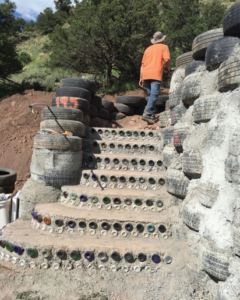
• Earthships are much more than recycling on steroids! An Earthship aspires to be a self-sufficient building with natural and recycled materials being a component. theDoighouse, our Earthship, will use in excess of 1,000 used car tires, 2,000 pounds of recycled cardboard, thousands of glass bottles (repurposed into glass building bricks to make ‘a poor man’s stained glass window’), thousands of beer and pop cans for interior walls, and 40 recycled patio door glass units.
• Rainwater collection with recycling of light grey water is expected to reduce our water consumption by 30% of an average household. Passive solar design (sighting the house on the property to maximize sunlight) and solar power replace BC Hydro bills!
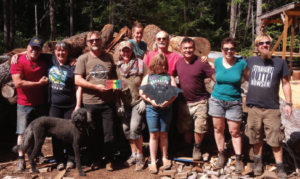
• One downside… the labour to hand-build a house, and the time it takes to build it. The upside… we have guests coming from all over the world to volunteer and to help learn. It’s an amazing opportunity for us and for them. We are truly grateful for this experience.
• Hempcrete is a natural lightweight insulation made from hemp hurds and lime. It is well suited for use in earthquake-prone areas as it resists cracking under movement. Russ Hannay of Errington Green Homes recently attended fireside@theDoighouse and shared his experimental variation of hempcrete using a local renewable resource. A perfect example of modifying a traditional material.
• Light Straw Clay – An EcoNest incorporates timber-frame, straw-clay walls, earth plasters and natural and non-toxic finishes. www.econesthomes.com
• Logs – logs are peeled, notched and then stacked. Building the Traditional Hewn Log Home is an excellent Mother Earth News article.
• Rammed Earth walls are formed by ramming a mix of gravel, sand, silt and clay into place between flat panels. Stabilized rammed earth includes a small amount of cement to increase durability and strength.
• Straw bale construction uses baled waste from growing wheat, oats, barley, rice and other crops as a super insulator in homes with R values of up to 30-45. Plastic bale uses compressed plastic.
• Timber frame is post and beam construction, using traditional mortise and tenon joinery and fine craftsmanship. www.tfg.org
• Traditional indigenous shelters (ethno-architecture) used natural materials, sourced locally and designed to meet the needs of the communities.
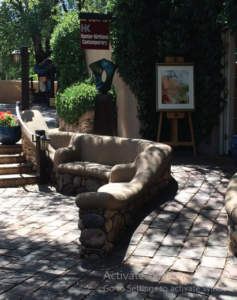
There are many more natural and recycled building material methods including bamboo, plastic bottle walls, mycelium structures, and good old fashioned stone masonry, including dry-stacking. Our structural engineer, Mark Fleischhaker, P.Eng shared he has also seen stacked camel/sheep poop structures and old fashioned yurts with felt and animal skin/bark. There are many excellent YouTube videos, permaculture and natural building Facebook groups. I encourage you to check them out.
Our goal is to grow and support a community for natural building.
Our monthly fireside@theDoighouse chat connects professional builders, enthusiasts and individuals curious and/or passionate about natural building. If that sounds like you, or someone you know, we meet the 3rd Tuesday of each month. Our next meeting is January 15th 2019 at the Lighthouse Community Centre in Qualicum Bay.
January 15th topic:
Building capacity: the art and business of natural building and design for professionals, enthusiasts, and the general public.
RSVP: susanmdoig@gmail.com
or Susan Doig, (250) 607.9225 for directions and details.